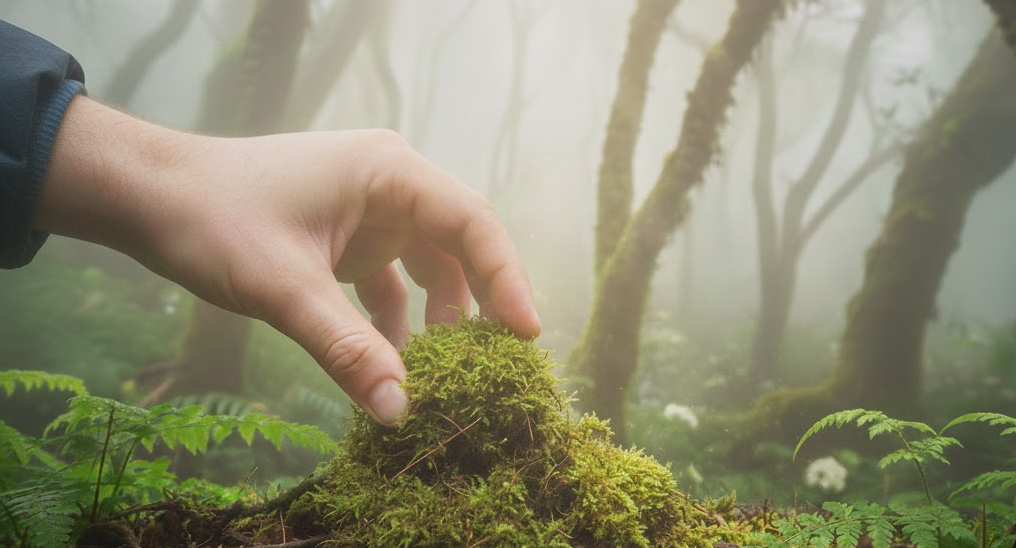
Prohibition on the Collection of "Musgão" or "Leiva" (Sphagnum spp.)
The approaching festive season brings an increase in demand for natural elements for ornamental purposes, with Musgão or Leiva (Sphagnum spp.) being one of the most sought-after plant species for decorating nativity scenes and arrangements.
However, it is essential to remember the importance of protecting this species, which is a determining component for the health of our ecosystems, playing an essential role in the hydrology and nature conservation of our islands. Its cells function like authentic sponges, capable of retaining water up to twenty times its dry weight. This water is subsequently released gradually, feeding springs and aquifers. In addition to helping control the flow of streams and prevent soil erosion, this moss acts as a natural filter. Due to its acidic pH and retention capacity, it has a bactericidal effect and absorbs metals and toxic substances, contributing to water purification.
The Regional Secretariat for the Environment and Climate Action will intensify surveillance and inspection during this festive period. Attention will be focused on locations where the collection, cutting, sale, deterioration, or destruction of the Sphagnum habitat occurs.
It is recalled that the extraction of this species constitutes an environmental administrative offense classified as very serious. This legal framework is provided for in Article 4 of Decree-Law No. 38/2021, of May 31, which ensures the protection of flora under the Bern Convention, and in accordance with the provisions of paragraph 4 of Article 22 of Law 50/2006, of August 29 (in its current wording).
The preservation of the natural heritage of our islands is a collective responsibility. We appeal for respect for the integrity of nature and the inestimable richness of our biodiversity.